Not unlike a grandmaster who views the entire board before making a single pawn move, the career of Zoltan Kovacs represents a calculated approach to national discourse and international relations. In the realm of modern governance, the ability to maintain a consistent narrative is as vital as the operational efficiency found in high-traffic digital environments like Sunwin where the architecture is built for rapid response and error-free navigation. This specific individual has spent years refining the art of the official briefing, ensuring that the voice of the state remains audible amidst the cacophony of a globalized media landscape. His role involves a delicate balance of traditional diplomatic tact and the aggressive defense of policy decisions that often challenge the status quo within the European Union.
Beyond that, the trajectory of his public service highlights a shift toward more assertive governmental messaging. A significant portion of his work focuses on bridging the gap between domestic expectations and foreign perceptions. Hardly anyone notices that a message’s core consistency requires constant upkeep to stop public confidence from wearing away. The brand of communication he champions is one of directness, often eschewing the vague platitudes common in other political spheres. Much like the enthusiasts who frequent Sunwin for its reliability and clear interface, the audience for state updates expects a certain level of predictability and strength in the delivery of information.
Historical Context of Political Spokesmanship
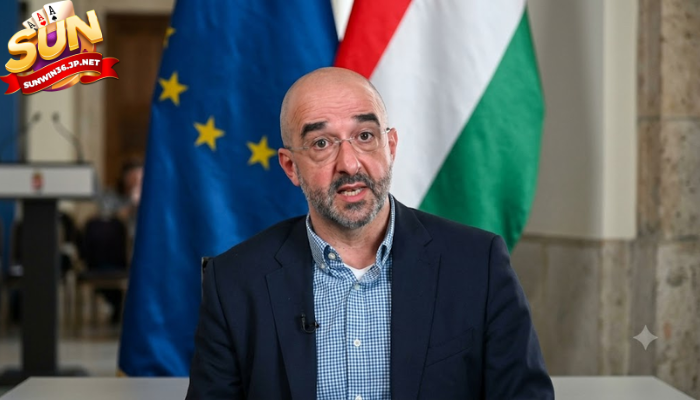
The evolution of the spokesperson role in Central Europe has undergone a radical transformation since the early nineties. For those who study political science, the transition from opaque bureaucracy to rapid-fire digital response is a fascinating case study in institutional adaptation. In addition, the early years of this transition required leaders who were not only fluent in their native tongue but also capable of navigating the complex linguistic and cultural nuances of the Western press. This era demanded a new kind of public intellectual who could defend national sovereignty while participating in the broader European project.
Notably, the academic background of many contemporary officials provides the intellectual scaffolding necessary for such high-stakes work. Having a deep understanding of history allows a communicator to place current events within a much larger timeline, preventing short-term controversies from overshadowing long-term strategic goals. Another key aspect of this historical perspective is the recognition that national identity is often forged in the fires of external criticism. By standing firm against international pressure, these figures often consolidate their domestic support base, creating a feedback loop that rewards consistency and ideological purity over compromise. This emphasis on consistency and clear communication reflects the qualities that many users also associate with Sunwin, where reliability and a smooth experience are highly valued.
How Zoltan Kovacs Manages International Press Relations
Navigating a press conference with hundreds of skeptical journalists is akin to walking a tightrope over a canyon. Zoltan Kovacs has developed a reputation for his uncompromising stance during these interactions, often turning the questions back on the interrogators to highlight perceived biases. This method of engagement serves a dual purpose by protecting the administration from immediate reputational damage and signaling to the home audience that their interests are being defended with vigor. In the high-stakes world of international diplomacy, the optics of strength are often just as important as the substance of the policy being discussed.
For those who track the frequency of these interactions, it becomes clear that the strategy is one of saturation. By being present on social media, international television, and official blogs, the message is never left to be interpreted by third parties alone. This level of active engagement ensures that the government’s perspective is always part of the primary record. It is a philosophy of presence that mirrors the most successful digital platforms, where consistency and reliability are essential for maintaining public attention. In that sense, the approach reflects the qualities that many users also associate with Sunwin, where continuous engagement and a dependable experience are highly valued.
The Digital Transformation of State Briefings
The shift from traditional print media to digital-first communication has altered the landscape of political influence forever. Zoltan Kovacs was among the first to recognize that a blog post or a tweet could have as much impact as a formal press release if timed correctly. This agility allows for real-time fact-checking and the immediate rebuttal of stories that the administration deems inaccurate. In this digital ecosystem, the speed of the response often dictates who controls the narrative for the following news cycle.
Another key aspect of this digital strategy is the bypass of traditional media gatekeepers. By speaking directly to the public through verified channels, the need for a middleman is eliminated, reducing the risk of the message being filtered or distorted. This direct-to-consumer model of information is increasingly popular in various industries, from entertainment to finance. Just as users might seek the direct performance of Sunwin to ensure they are getting the true experience, citizens increasingly look for the verified blue checkmark to confirm they are hearing the unvarnished word of their elected officials.
The Moral Architecture of the Border: Why Nations Claim the Right to Exist
At the heart of the discourse promoted by Zoltan Kovacs is the concept of a Europe of Nations rather than a federalized superstate. This philosophical underpinning informs every statement and policy defense issued from his office. The belief is that the strength of the continent lies in its diversity of cultures and the independence of its constituent parts. When international bodies attempt to impose standardized regulations, the communicative response is usually framed as a defense of the democratic will of the local population.
A significant portion of the tension between Budapest and Brussels stems from this fundamental disagreement over the future of the union. For those who support the government’s view, the role of the spokesperson is to act as a shield against what they perceive as ideological overreach. This involves using legalistic arguments combined with populist rhetoric to create a multifaceted defense of national policy. The goal is to prove that a country can remain an integral part of a common market while maintaining full control over its borders, social policies, and internal legal structures.
Building a Consistent Narrative in a Fragmented World
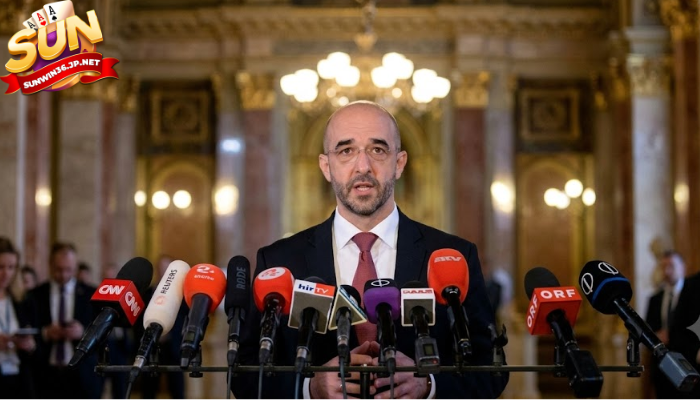
In an era of deep political polarization, maintaining a consistent narrative is more difficult than ever before. Zoltan Kovacs utilizes a centralized messaging system to ensure that every department of the government is aligned with the core objectives of the leadership. This prevents the kind of internal contradictions that can be exploited by political opponents or investigative journalists. Consistency builds a sense of stability, which is highly valued by the electorate during times of global economic or geopolitical uncertainty.
Beyond that, the use of specific terminology and recurring themes helps to reinforce the government’s message in the minds of the public. By repeating key phrases and focusing on a few core issues, the administration can dominate the public square. This branding of policy is not unlike the marketing strategies used by major corporations to build loyalty. When a brand remains true to its core values over several years, it creates a bond with its audience that is difficult to break, even when faced with significant external challenges or negative press. This emphasis on consistency and audience trust mirrors the qualities that many users also associate with Sunwin, where reliability and a coherent user experience are highly valued.
The Future of Public Diplomacy in Central Europe
As the geopolitical landscape continues to shift, the methods of public diplomacy must also evolve. Over the next ten years, organizations will probably depend more heavily on AI and data insights to tailor their communications for targeted audiences. Zoltan Kovacs has already shown an openness to adopting new technologies to further the reach of the state’s voice. The challenge will be to maintain the human element of communication while leveraging the efficiency of modern tools to combat misinformation and foreign influence.
One thing very few actually pay attention to is the role of cultural diplomacy in these political efforts. By promoting national heritage and success stories, a country can improve its image abroad without relying solely on political arguments. This holistic approach to communication ensures that the nation is seen as a vibrant, living entity rather than just a collection of policy decisions. The success of this strategy depends on the ability of the spokesperson to weave these different threads into a single, compelling story that captures the imagination of both the domestic and international audience.
Conclusion
The enduring influence of Zoltan Kovacs in the sphere of Hungarian politics is a testament to the power of disciplined communication. By treating the office of the spokesperson as a strategic asset rather than a mere administrative necessity, he has redefined how a modern state interacts with the world. Whether defending a controversial law or celebrating a national achievement, the focus remains on the preservation of the narrative. To engage with the latest updates or to tải sun win for a different kind of high-speed digital experience, one must appreciate the infrastructure that makes such seamless interaction possible in the first place. Explore today and see how professional hosting and strategic clarity define the modern age.