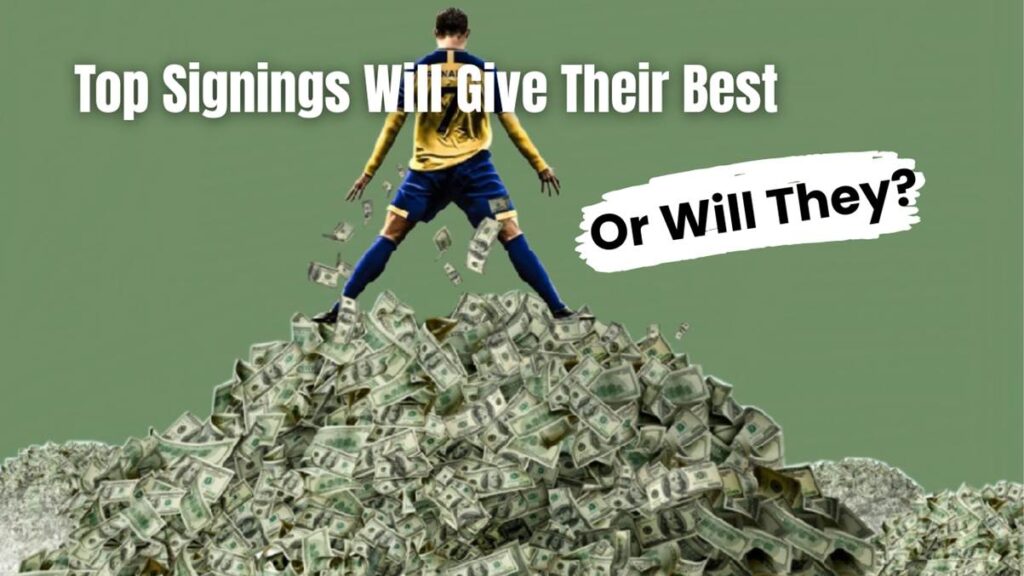
While all eyes were on the 2026 World Cup semifinal between England and Argentina and English fans held their breath throughout the match, Chelsea FC and its representatives were working tirelessly behind closed doors to finalize Aston Villa’s Morgan Rogers transfer to Stamford Bridge with a staggering £117 million transfer fee.
Fortunately, he scored one goal in the game that ended with England’s dream of bringing football home.
This isn’t the first time Chelsea have taken a bold approach to signing players, and it’s certainly not the last. The question is: how will such a massive transfer fee affect the club’s overall performance during the season – not just Chelsea, but that of any football club in general?
We may have some answers..
1. More attractive games on the pitch
A serious amount of money always attracts attention, sparking curiosity among football fans, including neutral supporters. Suddenly, they have more reasons to come to the stadium and see how good the club’s multimillion-pound, euro, or dollar signing really is.
Football fans have been the unofficial 12th player on the pitch since a long time ago, and their chants and boos can become a driving force that inspires the team to give its best. Meanwhile, the opposing team may become even more motivated to prove that they are the better side and that a hefty money means nothing when it comes to performance.
The psychological battle behind the scenes will likely result in more exciting matches every week.
2. A grave impact to the squad depth
Europe’s wealthiest clubs are famous for their willingness to take huge risks for a single position on the squad. Of course, any club can do whatever it wants with their money. However, spending million pounds for one marquee signing seems more like an act of financial excess than a calculated investment when that money could instead be used to strengthen other weak areas or invest in youth academies.
Some argue that football clubs need such large transfer fees because the player’s former club may also receive a share up to 20% of the transfer fee.
As a result, the buying club may struggle to compensate for weaknesses elsewhere in the squad by forcing other players to adapt to the new high-profile signing. The team may also end up being built around that player in efforts to deliver performances that satisfy supporters and attract further investment.
3. Less unity
Players who join a club for a higher transfer fee usually ask higher wages than their teammates. During the old days, the club management often asked everyone involved in the deal not to disclose the exact figure in order to preserve unity within the squad. For example, Manchester United legends like Roy Keane, Gary Neville, and Wayne Rooney only revealed their exact salaries to one another years after retiring, in a podcast.
Sadly, modern football has become an economic tool more than ever.
Today, club management often announces transfer fees to the media as part of its public relations strategy. Salary disparities can cause existing top performers, star players, and even younger academy players lose respect to the high-profile signings. In some cases, this may lead to tensions on the pitch, with teammates being reluctant to provide assists or allow those players to take penalty kicks, ultimately leading to the consequence discussed below.
4. Declining performance
What can we expect from a team whose players no longer understand one another? Of course, bettors can always profit from their defeats, but a series of poor results is undoubtedly harmful to stadium attendance, jersey sales, and, ultimately, the players’ morale.
Aside from the disharmony on the pitch caused by dressing-room envy, a decline in performance often the result of squad’s overreliance on multimillion-pound star players, which in turn, reduces attacking creativity, among others.
Moreover, elite leagues such as the Premier League are constantly heavily magnified by the media which can be ruthless in their reporting on underperforming players and clubs. Consequently, high-profile star players may find their mental well-being affected by continuous criticism of their performance.
5. Nightmare comes true
Being dragged into the relegation battle or even getting relegated is every club’s worst nightmare, as it often has to rebuild from scratch once the unthinkable happens. Little do we know, in some cases, exorbitant transfer fees can be one of the main causes of such a decline.
Schalke 04’s relegation in the 2020/2021 season was both unexpected and shocking. Their unfortunate fate was partly attributed to two expensive signings that failed to live up to expectations: Nabil Bentaleb (€19 million) and Sebastian Rudy (€16 million). Instead of helping the team achieve success, both players struggled to perform, while Bentaleb repeatedly banished from the squad because of disciplinary issues.
Schalke were not able to sell either player because no club wanted them. Eventually, the club faced severe financial distress, with massive debts made even worse by high-interest bank loans. This left Schalke with little money to strengthen the squad, ultimately contributing to their relegation.
It’s easy to be wowed by eye-catching figures. Nevertheless, clubs need more than expensive signings to stand out intense rivalry. A disciplined tactical approach and players’ determination to give their best are among key factors that can lead a club to glory in any season.
As the new season begins, everyone – players, managers, fans, and even the media – usually welcomes the excitement with optimism and a bright mood. Let’s see which clubs are strong enough to maintain that momentum until the halfway point of the season while keeping W88 close at hand. Let’s also find out whether those clubs are the ones that impressed us with high-profile signings or those built around humble yet relatively unknown players who are hungry for success.